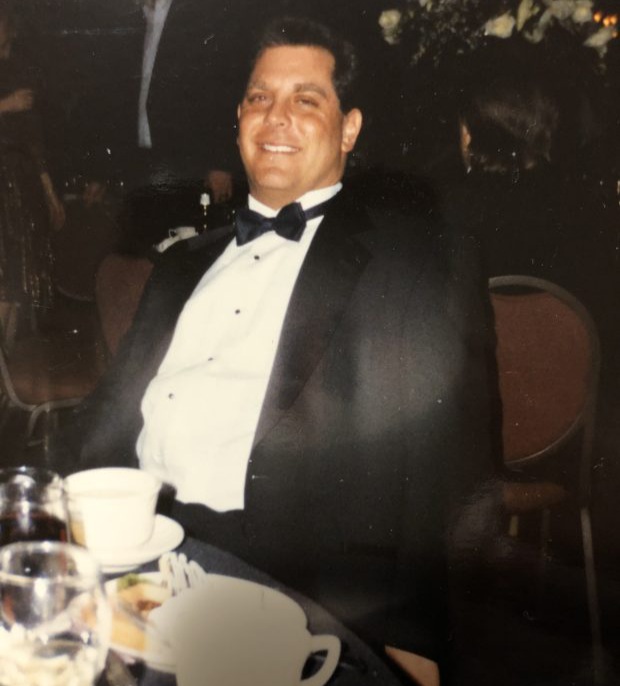
Case at a Glance
Kent Projansky was 40 when he was shot and killed in his Chicago apartment on December 18, 2004. For more than a decade, the evidence in his death pointed to no one. In November 2025, a 68-year-old man who police say once lived across the street from Projansky was extradited from Peru to face a first-degree murder charge. The charge is an accusation. The man, David Barklow, has not been convicted in the Kent Projansky murder case in the reports cited here; those reports describe charges and detention proceedings, not a verdict.
A killing in a Gold Coast apartment
Projansky was shot and killed inside his apartment in the 1100 block of North Dearborn Street, in the Near North Side area often called the Gold Coast. Chicago police and the Cook County State's Attorney's Office agree on the date, the address and his age.
According to Chicago Police Department detectives, officers from the 18th (Near North) District and detectives from the Area Three Detective Division responded and began processing the scene. Two shell casings were found near him. FOX 32 Chicago, citing police, reported that a friend found Projansky in his 30th-floor apartment and that there was no sign the unit had been ransacked. The same report summarized medical examiner findings of multiple gunshot wounds.
Prosecutors have characterized Projansky and Barklow as acquaintances, and police have not publicly offered a motive. NBC Chicago reported that police had not released details on a potential motive. Any account of why Projansky was killed would be speculation, and this article does not offer one.
The duffel bag that preserved a forensic trail
The most important physical evidence surfaced within days. Police said a duffel bag was found inside a garbage can on the city's Northwest Side. Prosecutors say a construction worker found it three days after the killing, about 14 miles from the apartment. They describe its contents as the murder weapon, bloodstained clothing and a box of ammunition.
Police say a now-retired officer, Christopher Lappe, was monitoring the police radio when the bag was recovered. Knowing about the Dearborn Street killing, he alerted detectives and forensic personnel to the possible connection. The Illinois State Police Crime Lab processed the bag, and police said it was linked to the ballistic evidence recovered at Projansky's apartment.
Two points of attribution matter here. The ballistic link is the police and crime lab account, not a ruling by a judge or jury. The accounts also differ slightly in emphasis: police describe a firearm "that matched the type of firearm used" in the killing, while prosecutors refer to the bag as containing the murder weapon. The police and prosecutor accounts both describe items from the bag as evidence in the case, although their descriptions of the firearm differ.
Why the investigation went cold
Linking a bag to a crime scene is not the same as identifying who left it. Police said detectives could not identify a suspect from the evidence and information available then. Prosecutors said investigators recovered latent fingerprint impressions from the items, but there were no leads. The case went cold after detectives exhausted their leads.
It stayed that way for more than a decade. The police and prosecutor accounts do not describe what specific investigative steps were taken in those years, so there is no basis here to judge them. What is documented is the gap itself, and that the investigation remained unsolved for more than a decade.
A renewed look points to David Barklow

In 2017, retired Detective James Browne took a fresh look at the file. Police said he knew the Illinois State Police Crime Lab had recently updated and modernized its latent examination technology, so he resubmitted the latent evidence from the scene and from the duffel bag. (Police materials spell his surname both "Browne" and "Brown." This article uses "Browne," the spelling in most references.)
Prosecutors described the same turning point slightly differently. In their account, the case was enrolled in a state project for unsolved homicides, and investigators were notified that latent impressions on items in the bag, including the ammunition box, were identified as belonging to the defendant.
Police said the resubmission identified Barklow as the offender. Detectives also learned he had lived across the street from Projansky at the time. Prosecutors put it as a neighboring building and said Barklow knew Projansky. The two descriptions are consistent but not identical, and the police and prosecutor accounts do not reconcile the wording.
This identification was an investigative lead. It gave detectives a name and a reason to seek further testing. Whether the evidence proves Barklow's involvement beyond a reasonable doubt is a question for a court.
The 2019 arrest and forensic confirmation
On October 16, 2019, the U.S. Marshals Great Lakes Regional Fugitive Task Force arrested Barklow. Police said a search warrant was secured, and investigators took a DNA sample and fingerprints from him. He was then released without charges while detectives waited for confirmation of a forensic link. Prosecutors said Barklow was questioned and released as the investigation continued.
Police said the Illinois State Police Crime Lab later confirmed a forensic link between Barklow, the firearm and the clothing in the duffel bag. They also said blood found inside the bag matched Projansky. Those findings come from police statements. The specific lab reports and any expert testimony have not been made public in the police and prosecutor statements, and they would be examined and challenged in court if the case goes to trial.
From the United States to Peru
What happened next is documented in broad strokes, with some gaps and a few variations between accounts.
- Departure. Police said Barklow fled the country in December 2019, roughly two months after his arrest. Prosecutors said he first crossed into Canada and then flew to Sweden, after which his location became unclear. FOX 32 Chicago, citing police, reported the same sequence of Canada and then Sweden.
- Ecuador. Police said they learned in early 2022 that Barklow had moved to Ecuador.
- Warrants. Prosecutors said an arrest warrant for first-degree murder was issued in Cook County in April 2022, and the FBI obtained a federal warrant for unlawful flight to avoid prosecution. Police also described a warrant for first-degree murder and unlawful flight to avoid prosecution.
- Peru. In April 2025, Investigative Response Team Detectives John Campbell and Jeff Rodenberg learned from INTERPOL that Barklow had traveled from Ecuador to Peru. Prosecutors said he was located at the airport in Lima on April 17, 2025, and detained.
The detention involved a wide set of agencies. ABC7 Chicago reported that the U.S. Department of Justice, its Office of International Affairs, the FBI, the U.S. Marshals Service, the State Department, the Regional Security Office at the U.S. Embassy in Lima and Peruvian authorities worked together. Every leg of the journey comes from official accounts. None of the news reports on the case provides independent travel records.
Extradition, charges, and the court process
Police said Barklow was extradited and arrived in Chicago on November 14, 2025. About seven months passed between the reported April detention and his return. The police and prosecutor accounts do not describe the Peruvian legal proceedings in that period, so this article does not characterize them.
Prosecutors said Barklow appeared in First Appearance Court at the George N. Leighton Criminal Courthouse on Saturday, November 15, and that they successfully petitioned for him to remain detained. Police listed two counts: one felony count of first-degree murder and one count described as "issuance of warrant." Prosecutors' announcement referred to first-degree murder charges. Assistant State's Attorneys Katie Siefert and Krystyn Dilillo are handling the prosecution.
State's Attorney Eileen O'Neill Burke said: "My office will never stop working to seek justice for victims and their families, no matter how much time has passed."
The police and prosecutor announcements cited here, both published in November 2025, did not report a plea, trial date, conviction or other final outcome. Barklow is an accused person, and he is presumed innocent unless and until a court finds otherwise. Some headlines have described the case as "solved." A CWBChicago headline used that wording. That is shorthand for an arrest and charge, not a legal finding.
Case timeline
| Date | Event | Basis |
|---|---|---|
| December 18, 2004 | Kent Projansky, 40, is shot and killed in his apartment, 1100 block of N. Dearborn Street | Police and prosecutors |
| Three days later | Duffel bag with clothing, ammunition and a firearm found in a garbage can on the Northwest Side | Prosecutors (construction worker); police ("within the first few days") |
| 2004 to 2017 | Bag and ballistic evidence linked to the scene; no suspect identified; case goes cold | Police and prosecutors |
| 2017 | Latent evidence resubmitted to the Illinois State Police Crime Lab; Barklow identified | Police; prosecutors cite a state unsolved-homicide project |
| October 16, 2019 | Barklow arrested by U.S. Marshals task force; released without charges pending testing | Police and prosecutors |
| December 2019 | Barklow leaves the country (police); Canada, then Sweden (prosecutors) | Police; prosecutors |
| Early 2022 | Police learn Barklow is in Ecuador | Police |
| April 2022 | Cook County murder warrant and federal unlawful-flight warrant | Prosecutors |
| April 17, 2025 | Barklow located and detained at the airport in Lima, Peru | Prosecutors |
| November 14, 2025 | Barklow arrives in Chicago after extradition | Police |
| November 15, 2025 | First Appearance Court; prosecutors win petition to keep him detained | Prosecutors |
What the reported evidence supports and what remains open
Reported strengths of the prosecution's case
- Physical evidence was recovered within days, including shell casings at the apartment and a duffel bag that forensic testing later linked to the case.
- Police say several forms of forensic evidence point the same direction: latent impressions, a DNA sample and fingerprints, and a blood match to the victim.
- Barklow is reported to have lived across the street from or next to the victim and to have known him.
- Prosecutors cite his departure from the country after questioning and release. Flight can be offered as evidence of consciousness of guilt, though a defense may offer other explanations.
Limits and open questions
- The forensic conclusions are so far described only through police and prosecutor statements, not tested findings in open court.
- Police have not publicly offered a motive.
- The accounts of his travel differ in detail, and the police and prosecutor accounts do not describe the Peruvian extradition proceedings.
- A 21-year gap raises ordinary questions about evidence handling, witness memory and the availability of records. The police and prosecutor accounts do not address how these might affect the case.
- The November 2025 police and prosecutor announcements cited here did not include a trial date, plea or verdict.
Frequently asked questions
Has David Barklow been convicted in the Kent Projansky murder case?
The police and prosecutor accounts cited here describe his arrest, extradition, a first-degree murder charge and a detention order. They do not report a conviction in this case.
How was Barklow identified?
Police said that in 2017 a retired detective resubmitted latent evidence from the scene and the duffel bag to the Illinois State Police Crime Lab after the lab upgraded its technology, and that the results identified Barklow. Prosecutors said latent impressions on items in the bag, including the ammunition box, were identified as his.
Why was Barklow released in 2019?
Police said he was released without charges while detectives waited for confirmation of a forensic link between him and the 2004 evidence. They later said the state crime lab confirmed that link.
Where was Barklow detained abroad?
Prosecutors said he was located at the airport in Lima, Peru, on April 17, 2025, and detained.
What is Barklow charged with?
Police listed one felony count of first-degree murder and one count described as "issuance of warrant." Prosecutors' announcement described first-degree murder charges.
What happens next?
The November 2025 police and prosecutor announcements cited here did not provide a trial schedule. The Cook County State's Attorney's Office reported that Barklow was detained after his first appearance on November 15, 2025; that announcement does not establish his current custody status.
References
- Chicago Police Department Detectives Secure Murder Charges in 2004 Homicide Following International Search for Suspect — Chicago Police Department
- Nearly 21 years later, charges made in Chicago cold case murder: police — FOX 32 Chicago
- Suspect extradited from Peru for 2004 murder of Chicago neighbor — NBC Chicago
- Chicago crime: David Barklow charged in 2004 fatal shooting of Kent Projansky at downtown apartment following South America search — ABC7 Chicago
- Cook County State's Attorney's Office Files Charges in 2004 Gold Coast Murder After Defendant Extradited from Peru — Cook County State's Attorney
- Cold case solved: Streeterville man fled to Peru after being identified as suspect in 2004 Gold Coast killing, police say — CWBChicago, November 15, 2025
'Cold Cases' 카테고리의 다른 글
| Barbara and Patricia Grimes: The Chicago Cold Case That Remains Unsolved (0) | 2026.10.17 |
|---|---|
| The Gloria Kowalewicz Case: A Chicago Murder Mystery That Lasted 65 Years (0) | 2026.10.13 |
