On December 28, 1956, two sisters left their Chicago home to watch an Elvis Presley movie. They were expected back that evening. They never made it home.
Barbara and Patricia Grimes were missing for nearly a month before their bodies were found in a wooded area near Willow Springs, southwest of Chicago.
The discovery ended the search for the sisters but left investigators with a much harder question: What happened to them?
More than six decades later, the case remains unresolved. The investigation produced a confession, conflicting accounts, and several theories, but no one was convicted for the sisters’ deaths.
Barbara and Patricia Grimes

The Sisters Who Never Came Home
Barbara and Patricia lived with their family in Chicago. Barbara was 15, and the Cook County Sheriff’s Office lists Patricia as 12 at the time of the incident. Some contemporary and later reports give Patricia’s age as 13.
The sisters shared an interest in Elvis Presley. During the Christmas holidays in 1956, they went to see his film Love Me Tender at the Brighton Theater in Chicago.
It seemed like an ordinary evening out. But the sisters did not return home, and their family soon became concerned.
When they had still not returned by around midnight, their mother, Loretta Grimes, contacted the police. What followed was a search that drew attention across Chicago.
A Search Filled With Uncertain Leads
News of the disappearance spread quickly. Investigators received reports from people who believed they had seen the sisters in different places after December 28.
One reported sighting placed two girls resembling Barbara and Patricia with sailors at a Chicago store in early January. Another account came from a woman who said she had encountered the sisters at a bus station restroom in Nashville.
That second report helped fuel speculation that the girls might have been travelling toward Memphis, where Presley lived. Presley himself made a public appeal asking his fans to return home and ease their mother’s worries.
These reports attracted attention, but they did not establish where the sisters had gone. Investigators still had no confirmed account of what happened after they left for the movie.
The search ended on January 22, 1957. A motorist near Willow Springs noticed what appeared to be two mannequins beyond a roadside guardrail. When he returned to check, the objects turned out to be the bodies of Barbara and Patricia.
The discovery brought the family’s search to an end. It also left investigators facing a homicide investigation with no clear answer about who was responsible.
What the Initial Findings Revealed
The sisters were found in a wooded area near old German Church Road, in what is now the Willow Springs area. The location was southwest of Chicago, away from the neighborhood where they had lived.

Early medical findings added to the uncertainty. A&E’s historical review reports that a preliminary autopsy indicated exposure to freezing temperatures. Contemporary accounts also described injuries, leading to disagreement among people involved in the investigation over what the evidence meant.
The medical findings did not produce a publicly established account that resolved every question. Differences over the timing and circumstances of the deaths became part of the case’s long history.
That uncertainty also complicated the search for a suspect. Detectives pursued different leads, and public pressure for an answer continued as the investigation developed.
The Confession That Did Not Solve the Case
In January 1957, investigators questioned Edward “Bennie” Bedwell, a 21-year-old drifter from Tennessee who had been identified through a reported sighting involving two men and two girls.
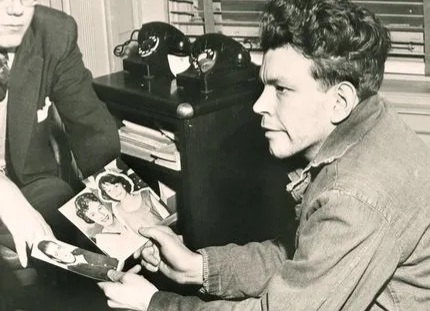
On January 27, Bedwell signed a confession claiming that he and another man had been with the sisters before their deaths. His account described events that placed the girls with them days after their disappearance.
But serious questions soon emerged about the confession.
According to A&E’s review of the case, medical experts had placed the deaths around December 28, while Bedwell’s factory timecard provided an alibi for the night the sisters disappeared. His defence attorney also argued that the confession had been coerced.
Bedwell was released on bond in February 1957. He was never convicted for the deaths of Barbara and Patricia.
The confession remains an important part of the story because it illustrates one of the investigation’s central problems: a signed statement did not resolve the conflict between the account given and other reported evidence.
It would be inaccurate to describe Bedwell as the confirmed killer. The available sources do not establish that conclusion.
Other Suspects and Theories
Over the years, investigators and people who studied the case considered other possible explanations. One name that later received attention was Charles Melquist, who had been convicted in a separate killing.
Former Chicago police investigator Raymond Johnson publicly argued that Melquist may have been responsible for the sisters’ deaths. CBS Chicago reported in 2018 that Melquist was never charged in the Grimes case.
That distinction matters. Johnson’s theory is a view held by a former investigator, not a judicial finding or an official determination of guilt.
Other accounts proposed that the sisters had encountered local youths before disappearing. These ideas formed part of the broader history of the investigation, but the reporting reviewed for this article does not establish any of them as the definitive explanation.
The case has accumulated theories over many years. None should be treated as fact without supporting evidence.
Why the Case Remains Unsolved
The passage of time has made the Grimes investigation more difficult to reconstruct. The case began in 1956, long before modern forensic methods became commonplace, and the public record contains conflicting accounts of important events.
Reported sightings did not provide a verified timeline after the sisters left home. The Bedwell confession was disputed, and investigators pursued other leads without securing a conviction.
It is also important to separate what is publicly known from what remains uncertain. The sisters disappeared on December 28, 1956, and their bodies were discovered on January 22, 1957. Their case has never resulted in a conviction.
The Cook County Sheriff’s Office continues to list the sisters’ case in its cold-case records and provides an official form for people with relevant information to submit a tip.
That means the case is not simply a mystery from Chicago’s past. It remains an open question in the official record.
What We Know Today
The basic timeline is clear. Barbara and Patricia left home to see Love Me Tender, did not return, and were found nearly a month later near Willow Springs.
The investigation generated reports, leads, and a disputed confession. But the sources reviewed for this article do not establish who was responsible for their deaths or provide a complete account of what happened after the sisters left the theater.
The unresolved details have helped keep the case in public memory, but speculation cannot take the place of evidence. Any new conclusion would need support from reliable records or official investigative findings.
For now, the sisters’ disappearance and deaths remain one of the Chicago-area cold cases without a confirmed resolution.
Have Information About This Case?
The Cook County Sheriff’s Office maintains an official case page for Barbara and Patricia Grimes and provides a form for submitting information related to the case.
Sources
- Cook County Sheriff’s Office – Barbara and Patricia Grimes Cold Case
- CBS Chicago – 2 Investigators: The Unsolved 1956 Case of the Grimes Sisters
- A&E – The Mysterious Unsolved Case of Barbara and Patricia Grimes
- The Columbia Chronicle – Reporting on the Grimes Sisters Case and Later Investigation
- University of Illinois Library – Illinois Newspaper Project
'Cold Cases' 카테고리의 다른 글
| The Gloria Kowalewicz Case: A Chicago Murder Mystery That Lasted 65 Years (0) | 2026.10.13 |
|---|
