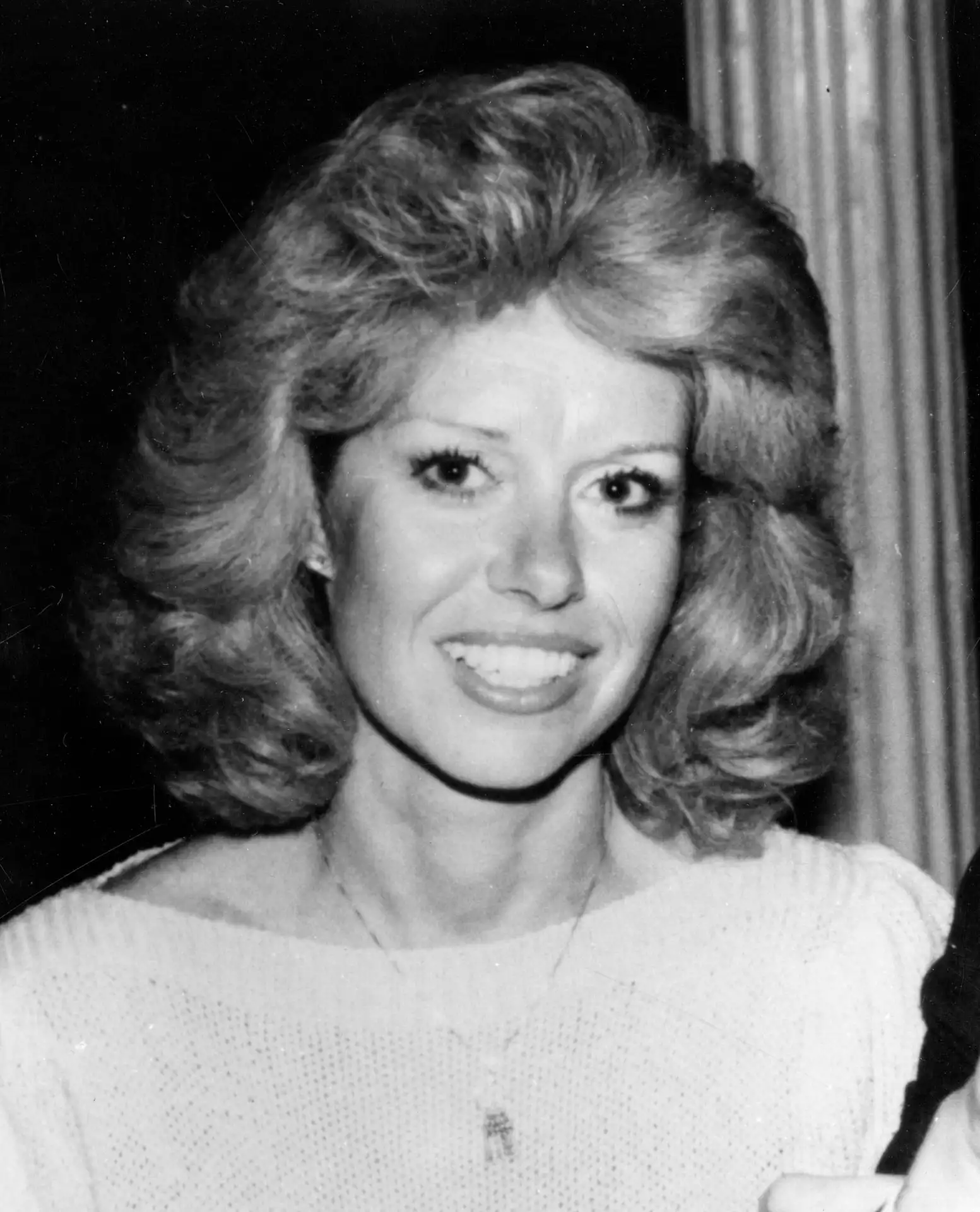
Paula Prince
Paula Prince was a 35-year-old United Airlines flight attendant who bought a bottle of Extra-Strength Tylenol at a Chicago Walgreens on September 29, 1982. She was found dead in her Old Town apartment two days later, the seventh and final identified victim of the Chicago-area cyanide poisonings.
Her death set off the citywide removal of Tylenol from store shelves. A store security camera photographed her at the register, and the receipt in her apartment showed where she had shopped. More than four decades later, no one has been charged with the murders.
Case at a Glance
A routine purchase, then a citywide warning
By the time Prince’s death was discovered, six other people had already collapsed after taking Tylenol capsules laced with cyanide. CBS Chicago's chronology traces the sequence from 12-year-old Mary Kellerman in Elk Grove Village on the morning of September 29 through three members of the Janus family in Arlington Heights, then Mary McFarland and Mary Reiner.
The discovery of Prince’s death brought the known victim count to seven and changed the response. According to PBS, Chicago Police Superintendent Richard Brzeczek learned of it at a formal event with Mayor Jane Byrne. He went to the morgue lab to confirm cyanide, then to the mayor's office, where Byrne called a press conference. She announced that city inspectors would remove Tylenol products from shelves the next morning.
What is known about Paula Prince
The public record on Prince's life is thin, and what follows is limited to what the reporting supports.
- Age and work: She was 35 and a flight attendant for United Airlines.
- Home: She lived in an apartment near downtown Chicago. Chicago magazine's 2012 oral history places it at 1540 North LaSalle Street in Old Town.
- Background: PBS describes her as a single woman living in the city and a "hardworking Nebraska native."
The people who knew her are quoted only briefly. Joan Ahern, a United flight attendant and friend, told Chicago magazine that "Paula was blond, vivacious, had a gorgeous smile." Ahern also recalled that Prince's sister was supposed to meet her for dinner and could not reach her by phone, which alarmed the family.
Prince was also a no-show for a scheduled flight that Friday, according to Ahern's recollection of what she understood.
Beyond these details, the published coverage gives no fuller portrait of her family or personal life, and none should be inferred. Her case is told mostly through the evidence around her death.
Where her death falls in the poisoning sequence
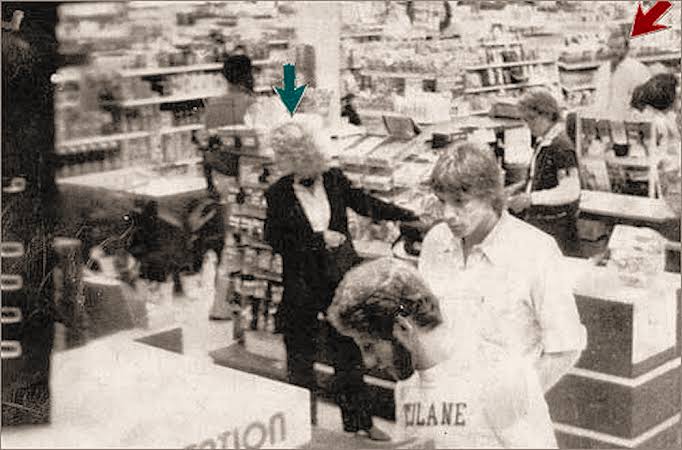
In this store camera frame, Paula Prince (green arrow) is seen at the counter purchasing Tylenol that later turned out to be poisoned with cyanide. Police later pointed to the bearded man behind her (red arrow) as a person who could have been involved.
The publicly recognized sequence of poisonings began on September 29, 1982. Mary Kellerman was pronounced dead at 9:56 a.m. that day, and the other Janus family deaths and the McFarland and Reiner deaths followed within about a day. Theresa Janus was taken off life support on October 1.
According to CBS Chicago, Prince's sister, Carol Prince, found her body at about 5:45 p.m. on October 1 and called police. The Medical Examiner's office declared her dead at 6:45 p.m.; this is the pronouncement time, not proof of when she ingested the capsules or died. Chicago magazine's oral history gives an earlier time, about 5 p.m., for the police discovery, so accounts differ slightly on the hour.
The date is also labeled differently in retrospective coverage. A CBS Chicago video report dated October 2, 1982 reports that she became the seventh Tylenol murder victim. The written timeline from the same outlet places the discovery and the pronouncement of death on the evening of October 1, while the October 2 broadcast is not evidence that Prince died on October 2.
Her actual time of death was not established in these accounts.
What investigators found in her home is documented in restrained terms:
- A bottle of Extra-Strength Tylenol in her bathroom with one capsule missing.
- A receipt from the Walgreens at 1601 N. Wells St.
- An open bottle on the vanity, in Brzeczek's account to Chicago magazine.
- A Chicago police detective's impression, reported by PBS, that she appeared to have been removing her makeup when she was stricken.
Cyanide was confirmed in her case by the lab work described by Brzeczek on the night of her discovery. The Medical Examiner's office had earlier confirmed cyanide in two Tylenol bottles from the Kellerman and Janus homes.
The retired deputy medical examiner Edmund Donoghue said in the Chicago magazine account that he believed she took the capsules on Wednesday night and was dead by the time officials held their first press conference.
The Walgreens receipt and register photographs
The receipt was the first thread. PBS reports that homicide detective Jimmy Gildea found a Walgreens receipt in her apartment with the Tylenol on it, timestamped, which told police where she bought it. Chicago magazine's account places the purchase at about 9:30 p.m. on September 29, after she landed at O'Hare from Las Vegas. That timing comes from the recollections in the oral history rather than from the receipt itself.
Police then obtained photographs from the store. PBS says a security camera captured Prince buying the Tylenol, in an era before cameras were routine. Brzeczek described the images in the Chicago magazine account as still photos of her walking up to the cash register and "buying her death warrant right there." A contemporaneous UPI report from October 18, 1982 documents the public release of the drugstore security images. It also describes unproven speculation about a man visible in the footage; that account did not identify the poisoner or establish anyone’s guilt.
The photographs mattered, but they proved little about the crime itself:
- They show a woman making a legal purchase.
- Brzeczek said there were no cameras in the aisles to show whether anyone was putting tainted product on a shelf.
- PBS states that the photos did not lead to any viable suspects.
Authorities also ruled out contamination during manufacturing, per PBS, concluding that someone had tampered with the product after it left the factory. Chicago magazine reports that a tainted bottle was later found, on October 21, in a bottle turned in by a Dominick's near the Walgreens where Prince shopped.
A sprawling investigation and an early suspect
The response was enormous. Illinois Attorney General Tyrone Fahner assembled what PBS calls the largest task force in state history, which Fahner described as "a couple hundred people." According to CBS Chicago, the effort drew 300 or 400 tips a day. Chicago magazine reports that the task force was cut from 115 to about 40 investigators on October 25.
The central difficulty was randomness.
The victims shared little beyond the medicine and the region, and the person responsible was not present when anyone died. The FBI's behavioral analysis unit produced an early profile, which agent Roy Lane found useful. It predicted that the killer would eventually want to insert himself into the investigation.
Roger Arnold
The first notable suspect emerged from a bartender's tip, according to WTTW. A patron, 48-year-old Roger Arnold, had claimed to have cyanide and talked about how easy it would be to put it in capsules.
Arnold told detectives he bought cyanide for amateur experiments and denied being the poisoner. A search of his home turned up guns, chemistry equipment and books on bombs, but no cyanide.
A bag of white powder was not cyanide, per WTTW. Investigators also noted overlaps that they found suspicious:
- He frequented bars near the Walgreens where Prince bought her bottle.
- He worked at a Jewel warehouse. Two of the tainted bottles were bought at Jewel stores.
- He worked with the father of one victim.
Arnold was charged with weapons violations, not poisoning. After his name leaked, he shot and killed a man he mistakenly believed had tipped off police. That man, John Stanisha, had no connection to the case. Arnold was convicted of Stanisha's murder and sentenced to 30 years. He was never charged in the Tylenol murders. Gildea summed up his own view this way: "I can't say that he didn't do it." That is an acknowledgment of uncertainty, not an accusation or a finding.
James Lewis: a central suspect, never charged with the killings
How investigators reached him
On October 6, 1982, Johnson & Johnson received a letter demanding $1 million and claiming how easy it was to put cyanide in capsules. A second letter was addressed to President Ronald Reagan. WTTW reports that investigators traced the postage meter stamps to a Chicago-area travel agency. Its owner was ruled out and suggested a man named Robert Richardson, whose wife had been a former employee. When Richardson's photo circulated nationally, a Kansas City police sergeant recognized him as James Lewis.
After about two months on the run, Lewis was arrested in New York on December 13, 1982. His attorney admitted that Lewis wrote the extortion letter but said he intended to frame his wife's employer, not extort Johnson & Johnson. A jury convicted him of attempted extortion, and he received a 10-year federal sentence, per PBS. That conviction was for extortion, not murder. Investigators could not place Lewis in Chicago at the time of the poisonings, and prosecutors lacked enough evidence for murder charges.
The second task force
The FBI and the Arlington Heights Police Department quietly revived the investigation in 2006. PBS describes a sting in which an undercover agent posed as a journalist writing a book that would supposedly clear Lewis. Agents met with James and LeAnn Lewis more than 60 times and recorded the meetings. Reported developments include:
- Walgreens visit: According to Lane, Lewis became visibly excited at the Walgreens where Prince had shopped and went directly to the spot where Tylenol had been shelved in 1982.
- Timeline problem: Lewis claimed he spent three days writing the extortion letter. A postal date stamp showed it was mailed October 1, 1982, which would mean he started writing before the poisonings became public. Lane called it a major admission.
- Search warrant: A search of the Lewis home followed on February 4, 2009. Among the papers was a handwritten document with a title beginning "Yes, I am a killer," which PBS reports without explaining its context.
- DNA: Fresh DNA from Lewis was compared with profiles found on three tainted bottles and the capsules inside. It was not a match.
Investigators presented prosecutors with about 50 pages of circumstantial evidence. One proposed motive involved the 1974 death of Lewis's daughter, Toni, after surgery in which the sutures tore. The theory was that he sought revenge on Johnson & Johnson, which had trademarked those sutures.
That remains an investigative theory. Prosecutors declined to bring charges. Lewis consistently denied involvement and died in 2023, never charged with the Tylenol murders.
Strengths and weaknesses of the Lewis theory
What investigators pointed to
- He wrote the extortion letter and was convicted of attempted extortion.
- His account of the letter's timing conflicted with the postmark.
- He volunteered theories about how capsules could be tainted.
- His behavior at the Walgreens drew investigators' attention.
What kept the case from charges
- The DNA did not match him.
- Journalist Christy Gutowski summarized the problem to WTTW: "There is no physical evidence connecting James Lewis to the Tylenol murders."
- No records or eyewitnesses placed him in Chicago before the poisonings.
- Some who worked the case disagreed. Brzeczek told Chicago magazine, "It wasn't James Lewis," while Fahner said he believed Lewis was involved but that investigators could never put him in the right places at the right time.
A September 2026 Lead, Not a Confirmed Link
On September 23, 2026, investigators with the Ada County Sheriff's Office in Idaho identified a man who had been known for decades as the “Unknown Wanderer.” The man, Dr. Mathew Francis Betkouski, died from cyanide poisoning inside a Boise church in December 1982. Idaho investigators described information that prompted them to examine a possible connection to the Chicago-area Tylenol murders, including his work history, reported comments about poisoning, a Chicago map, and evidence that he had visited the area in 1981. They had not established that he was in Chicago during the September 1982 poisonings. The Associated Press reported that a cyanide compound found in his belongings differed from the compound involved in the Tylenol killings.
Idaho authorities shared their findings with Chicago investigators. The Chicago Sun-Times reported that Chicago police were reviewing whether there was any connection and continued to describe the killings as an open cold case. CBS Chicago quoted the FBI as saying it remained the lead investigative agency and warning that earlier purported links had proved unsubstantiated. Arlington Heights police also said they were reviewing the information. No connection to Paula Prince's death has been established, Betkouski was not charged, and no one has been charged in the Tylenol murders.
What the evidence can and cannot establish
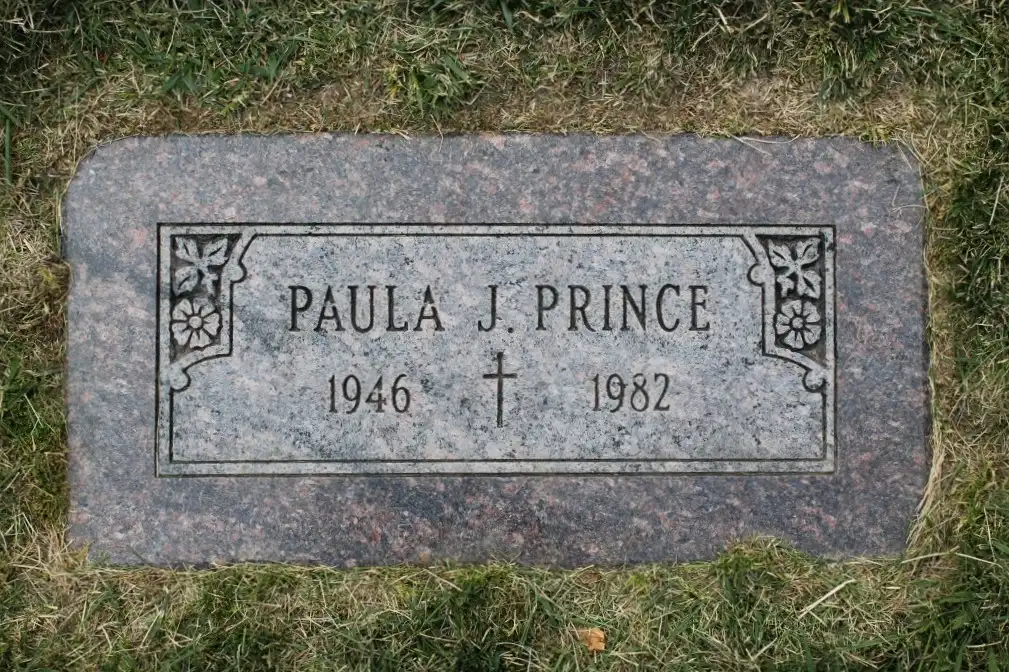
Paula Jean Prince (November 21, 1946 - October 1, 1982)
Source: Find a Grave - Paula Jean Prince
For Prince's case specifically, the record supports a narrow set of facts and leaves the central question open.
| Evidence | What it shows | What it does not show |
|---|---|---|
| Walgreens receipt | Where and roughly when she bought the Tylenol | Who altered the capsules |
| Register photographs | That she purchased the bottle herself | Who tampered with the product or put it on the shelf (no aisle cameras) |
| Cyanide findings | Cause of death was cyanide poisoning from the contaminated product | The tamperer's identity or motive |
| Roger Arnold's profile | Circumstantial overlaps with locations and a victim's relative | Any link to the poisonings; he was never charged |
| Lewis's extortion conviction | He wrote the letters sent after the deaths | That he poisoned anyone |
| DNA on bottles | Profiles that did not match Lewis | Whose DNA it is or whether it is relevant |
The case remains open. In September 2026, the FBI's Chicago office described itself as the lead agency, while Chicago police and Arlington Heights police also confirmed their continued involvement. WTTW previously reported that the open status limited release of investigative evidence and case files. PBS reports that some relatives and Brzeczek objected to that secrecy after the death of the longtime suspect. LeAnn Lewis, who never cooperated with investigators, did not respond to requests for comment in the PBS reporting. Lewis's death did not resolve who killed Prince or the other six victims.
The legacy of the case
The poisonings changed how medicines are sold. After the discovery of Prince's death, Chicago announced that Tylenol would be pulled from shelves. Chicago magazine reports that the City Council passed an ordinance on October 4 requiring tamper-resistant packaging for all drugs sold in stores, and Johnson & Johnson recalled Tylenol nationwide on October 5, about 31 million bottles worth more than $100 million. It became one of the most consequential consumer product recalls in American history. In 1982 there were no safety seals on over-the-counter medicine, and the seals consumers now take for granted trace to this case.
The fear spread well beyond Chicago. More than 40 cities banned trick-or-treating that October, per PBS. Fahner has called it perhaps the first domestic terrorism incident in the country, as CBS Chicago reports, because the victims were random. Ahern told Chicago magazine she kept no over-the-counter pills at home for more than two years afterward.
The families bore the longest cost. Ahern said people affected by the poisonings never got closure or the chance to confront the person responsible. Better packaging does not offset that, and the question of who contaminated Prince's bottle is still unanswered.
Frequently asked questions
Who was Paula Prince?
She was a 35-year-old United Airlines flight attendant living in Chicago’s Old Town area, described by PBS as a Nebraska native. She was the seventh and final identified victim of the Tylenol poisonings; her body was discovered on October 1, 1982.
When and where was she found?
Her body was found in her apartment on the evening of October 1, 1982, according to CBS Chicago. She was declared dead at 6:45 p.m. Some retrospective coverage uses October 2 as the date she "became" the seventh victim.
Did the Walgreens photographs identify the killer?
No. They show Prince buying the bottle. Brzeczek noted there were no cameras in the aisles, and PBS reports the photos produced no viable suspects.
Was anyone convicted of the Tylenol murders?
No. James Lewis was convicted of attempted extortion and Roger Arnold of the unrelated murder of John Stanisha. Neither was charged with the poisonings.
Is the case still open?
Yes. As of September 2026, the FBI described itself as the lead agency, with Chicago and Arlington Heights police also involved. Lewis died in 2023 without being charged, and the September 2026 Idaho information did not establish a new suspect or resolve the murders.
References
- Chicago Tylenol murders 40 years later: Unraveling one of the country's most infamous crimes - CBS Chicago — cbsnews.com
- Chicago Stories — PBS
- Oct. 2, 1982: Paula Prince becomes seventh Tylenol murder victim - CBS Chicago — cbsnews.com
- Revisiting Chicago’s Tylenol Murders — Chicago magazine (original publisher)
- Police Release Store Security Images (October 18, 1982) — United Press International
- Who Committed the Tylenol Murders? After More Than 40 Years, the Case Remains Unsolved. — WTTW Chicago
- Idaho Cold Case and Possible Tylenol Connection (September 23, 2026) — Associated Press
- Unknown Wanderer Identified; FBI and Police Statements (September 23, 2026) — CBS Chicago
- Idaho Authorities Present New Lead on Tylenol Murders (September 23, 2026) — Chicago Sun-Times
'Cold Cases' 카테고리의 다른 글
| Yasmin Rayon Acree — (2008) Missing Case (0) | 2026.11.04 |
|---|---|
| Nancie Carolyn Walker — (1947-2003) (0) | 2026.11.02 |
| The Jesse Warren Ross Missing Case — (2006) (0) | 2026.11.01 |
| The Kevin Clewer Case — (2004) (0) | 2026.10.31 |
| Mary Agnes Moroney — (1930) (0) | 2026.10.30 |
