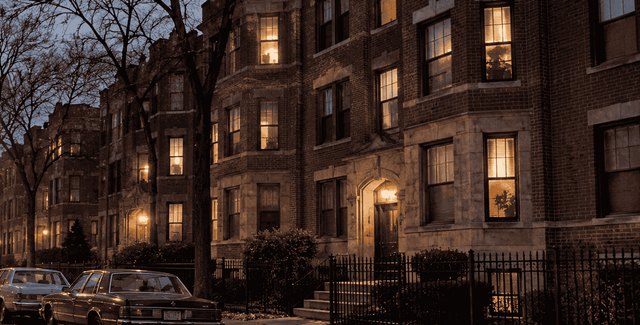
Carol Novak, 35, was killed in her North Side Chicago home in October 1981. The case went cold, and it was not solved until DNA from evidence the police had kept for three decades pointed to a man already in prison.
That man, Eugene Booker, was convicted of first-degree murder in 2018, and the Illinois Appellate Court affirmed the verdict in 2022. The record is a useful look at what preserved evidence can show, and at what a courtroom can and cannot conclude from it.
The 1981 killing on North Paulina Street
Novak lived in the 5800 block of North Paulina Street. Thomas Loftus, her boyfriend at the time, testified at trial that he had spoken with her by phone at 3:30 p.m. on October 1, 1981, while she was at work. He called again around 8:30 p.m. and got no answer. When he arrived at her home around 6 a.m. the next morning, October 2, the back door was unlocked and the lights were on.
He saw blood on the floor and broken blinds on a window, then found Novak on her living room floor. According to the appellate court's order in People v. Booker, No. 1-19-0492 (Nov. 10, 2022), which summarizes the trial testimony, she was lying face down just inside the living room, wearing a bra and jeans but no underwear.
Retired detectives described a scene that stretched through the house. A trail of blood led from her body to a bedroom, through the kitchen and onto the enclosed back porch. There was a large bloodstain on the porch, and the porch window blinds were on the floor. In the bedroom, bloodstains in the shape of hands marked the bedsheets.
A blue blouse lay on the bed with four buttons on the floor, and investigators described it as appearing to have been torn apart or torn off. A pair of panties was on the floor three or four feet from the bed. Novak's dog was also found injured in the pantry.
The number of wounds is described differently across sources. CBS News reported when charges were announced that Novak was stabbed about 50 times in the back, right side and right eye, and other news coverage used similar "more than 50" language.
At trial, a Cook County assistant medical examiner who reviewed the 1981 autopsy report testified to 105 sharp-force injuries to the face, neck, right shoulder and trunk, with lung injuries that collapsed the lungs.
The two descriptions come from different times and purposes: a prosecutors' announcement summarized for the press, and a physician's detailed review of the autopsy for a jury. Both describe the same fatal attack. The medical examiner put the cause of death as multiple stab wounds and the manner as homicide.
The brief item in the October 3, 1981 edition of the Chicago Sun-Times, as later recounted, placed her body in the dining room. Trial testimony placed it in the living room. The available sources do not explain the difference, so this article follows the detailed trial testimony summarized in the appellate order.
Evidence preserved before DNA testing was possible
In 1981, the crime lab could test for the presence of blood and semen but could not generate a DNA profile. Christine Kokoconski Sahs, a Chicago police crime lab microanalyst, testified that she ran chemical tests on bloodstains from the bedsheets and a jacket.
She also examined Novak's oral, rectal and vaginal swabs for semen. The vaginal swab tested positive. The oral and rectal swabs did not. She testified that DNA testing did not exist at the time, and she kept the bedsheet and six cuttings from the jacket for possible future testing.
That decision mattered. Retired detective Denise Troche testified that in 2013 she reviewed the file for the department's cold case team and located the surviving items: Novak's vaginal swab and blood vial, Loftus's fingernail scrapings, a box of blood extracts from a bedsheet, and the six jacket cuttings. Not everything collected in 1981 turned out to matter. Loftus's fingernail scrapings, for example, were used to establish his own DNA profile for comparison. The most important items were the swab, the sheet material and the jacket.
CBS Chicago reported that police reopened the case in 2013 and entered the DNA evidence into a computerized DNA identification system. News coverage also reported that the retesting was paid for with money from a federal grant.
| Preserved item | 1981 handling | Later DNA findings (as described at trial) |
|---|---|---|
| Vaginal swab | Tested positive for semen | Partial male profile from sperm; did not match Loftus |
| Jacket cuttings | Bloodstains tested; six cuttings retained | Partial male profile in blood, appearing to match the swab profile; one stain showed a mixture with a male major profile matching it |
| Bedsheet | Bloodstains tested; sheet retained | Mixture; major profile consistent with Novak, minor male profile matching the swab |
| Oral and rectal swabs | Tested; no semen found | Not a source of the male profile |
| Fingernail scrapings (Loftus) | Collected from Loftus in 1981 | Used to identify Loftus's own profile |
The DNA match and Booker's identification
Kelli Byrd, a senior forensic DNA analyst at Bode Cellmark, did the principal analysis. She used threads containing Novak's blood as the standard for Novak's own profile, then analyzed sperm from the vaginal swab.
The result was a partial male DNA profile that did not match Loftus. Two jacket cuttings with blood showed an unknown partial male profile that appeared to be the same.
A third bloodstain from the jacket was a mixture with a major male contributor matching that profile. On the bedsheet, the major profile in a mixed stain was consistent with Novak and the minor profile came from a male with the same profile as the sperm on the swab.
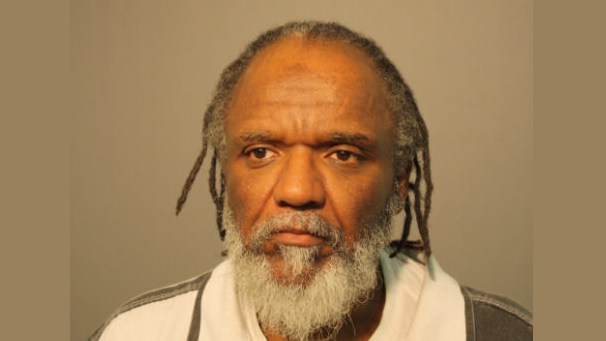
Byrd sent the unknown male profile to the Illinois State Police crime lab. After it was run through the FBI's national database, Booker was linked to it. He was already in prison, and Chicago police detective Rolando Rodriguez testified that he obtained a warrant to collect a DNA sample from Booker at Hill Correctional Center in February 2014.
When Rodriguez showed Booker photographs of Novak, Booker said he had never seen her. The reference sample reached Byrd through the state police in 2014.
Byrd concluded that Booker's profile was consistent with the partial male profile from the sperm. She estimated the chance that a random person would match the swab profile as:
- 1 in 51.03 trillion among black individuals
- 1 in 93.67 trillion among southwestern Hispanic individuals
- 1 in 2.49 trillion among southeastern Hispanic individuals
- 1 in 1.43 trillion among Asian individuals
- 1 in 286.6 trillion among white individuals
Booker's profile was also consistent with the male profile in the three jacket bloodstains, and he could not be excluded as a contributor to the mixed profile on the bedsheet. A supervisor at the Illinois State Police, Greg Didomenic, confirmed that Booker could not be excluded from the swab profile.
These figures describe how rare the profile is, which is why the match was treated as identifying a contributor. They do not by themselves say when or how the contact happened, or whether Novak consented. Those questions were argued at trial against the rest of the scene evidence.
When charges were announced on Friday, November 21, 2014, the Chicago Sun-Times reported that Booker, then 59, was already serving an 80-year sentence for a series of sexual assaults on the North Side. Per the paper, Cook County State's Attorney Anita Alvarez said blood on Novak's jacket and evidence from the sexual assault matched his DNA.
The paper also reported, citing an Alvarez spokeswoman, Sally Daly, that Booker initially denied the murder to detectives but eventually said "You can’t fight DNA" and "I’m definitely sorry about what happened to her." Those statements are the prosecutors' account as reported at the time.
The appellate order records that he was charged with three counts of first-degree murder, alleging intentional or knowing killing, killing with knowledge of a strong probability of death or great bodily harm, and killing while committing rape. The appellate order records December 15, 2014, as the date Booker was charged. That differs from the November 21 date in contemporary news coverage, and the available sources do not explain the discrepancy.
The prosecution's case and the defense response
Booker's trial began on October 22, 2018. The State called 15 witnesses. Beyond the DNA analysts and the detectives who processed the scene, they included the medical examiner and Loftus. The State told jurors in opening that the case "went cold" until new testing produced a match.
A central question was whether Novak had consented to sex with Booker. Before trial, prosecutors sought to introduce seven crimes Booker committed in 1986. At the hearing, the State withdrew its request to use that evidence to show propensity and argued instead that it showed intent, identity, motive, modus operandi and lack of consent. The trial court allowed evidence of three offenses and excluded four, because Booker had pleaded guilty in those cases and the files had been destroyed.
Ultimately two women, identified in the order by their initials, P.M. and S.L., testified. Each described being followed into her building in the evening, forced into her apartment at knifepoint, and sexually assaulted. Before they testified, the judge told jurors the evidence could be considered only for the limited purposes stated.
The defense did not deny that Booker's DNA was at the scene. In opening, counsel acknowledged Booker's prior rape convictions and prison sentence but said he "did not murder Carol Novak," and told jurors that no witness could say when or where a sexual encounter happened or whether it was forced.
The defense also pointed out that the medical examiner reported the vaginal and cervical exam as unremarkable, with no notation of injury or trauma, though she added that such injuries are not always associated with sexual assault. In closing, defense counsel argued that Loftus killed Novak after discovering she had had sex with Booker. Counsel argued that more than 100 stab wounds suggested an act of passion or jealousy rather than an attack by an unknown intruder, and that the 1986 assaults differed from Novak's case.
Defense witnesses included a coworker who testified that Novak planned a personal day on October 2 to prepare for weekend visitors, and a woman who recalled two wine glasses on the coffee table while helping clean the home afterward.
The jury found Booker guilty of first-degree murder. The court sentenced him to 40 years in prison.
What the appeal reviewed, and why the conviction stood
Booker appealed on two main grounds: that the trial court should not have admitted the testimony about the 1986 assaults, and that the prosecutor argued facts not in evidence during closing. In an order filed November 10, 2022, a three-justice panel of the First District of the Illinois Appellate Court affirmed. Justice Rochford wrote the order, with Presiding Justice Lampkin and Justice Martin concurring. It was issued under Supreme Court Rule 23, which means it is not precedent except in limited circumstances.
On the prior-assault evidence, the court noted that such evidence is generally barred when offered to show a person is the type to commit crimes, but may be admitted for other purposes such as intent. Consent was a material issue, because the defense claimed a consensual encounter. Following earlier Illinois decisions, the court held that Booker's intent when he encountered P.M. and S.L. was relevant to Novak's lack of consent.
When the evidence goes to intent or lack of an innocent frame of mind, the court said, only general similarities are needed. It found them: all three women lived on the North Side and were attacked in their homes in the evening without a break-in, a knife or sharp instrument was used, the women were forced into bedrooms, and a blouse was torn in Novak's case in a way that echoed a detail from P.M.'s account.
The court acknowledged differences, such as the tying with pantyhose and the stolen valuables in the other cases, but noted that no two crimes are identical. It also found the evidence was not a focal point of the trial: only two of the 15 witnesses addressed it, and the references in the State's closing took up about half a page of a 12-page argument.
On the closing arguments, the court rejected the claim that the State's whole narrative was improper. It found that the evidence reasonably supported inferences that Novak did not consent, was assaulted in her bedroom, and tried to escape. It did find "some merit" in two objections.
There was no evidence Booker stole or tried to steal from Novak, and no direct evidence for the claim that he had "learned his lesson" and later tied up other victims. The court held that, even if those remarks were improper, they did not affect the verdict given the argument as a whole, and the jury had been instructed that attorneys' statements not based on the evidence should be disregarded.
The court added that any error in admitting the prior-assault evidence would have been harmless. It pointed to the DNA results, the trail of blood through the house, the knocked-down blinds, and the large pool of blood on the porch floor. It concluded that the circumstantial evidence strongly indicated Novak was sexually assaulted and killed by Booker, so the outcome would not have differed.
The ruling means the trial was legally sound and the verdict could stand. It does not mean every detail of the prosecutors' reconstruction, such as how Booker entered the house or exactly what he did there, was independently proven. The court itself found some of those inferences unsupported while holding that they did not change the result.
What the evidence established and what it left open
Where the record is strong
- The DNA from semen and from blood tied Booker to the scene, with random-match estimates in the trillions.
- A blood trail, damaged clothing and displaced blinds documented a violent struggle.
- Consistent DNA results came from separate items: the swab, the jacket and the bedsheet.
Where the record has limits
- Few details about timing and entry were established by direct testimony.
- Physical findings about injury from the sexual assault were absent from the medical examiner's report.
- The prior-assault testimony addressed intent but could not show what happened inside Novak's home.
A cold case resolved, with the record kept in view
The investigation that identified Booker relied on choices made in 1981: collecting the vaginal swab, keeping the bedsheet and jacket cuttings, and holding them for more than three decades. Cold case detectives in 2013 found those items, and the lab work in 2014 tied them to a name.
Prosecutors then tested that link before a jury, set it against the physical evidence from the home, and defended it on appeal.
The proceedings also showed the contested territory around the DNA: whether Novak consented, how the attack unfolded, and what a jury may fairly infer from circumstances no witness saw. The court's answer, under its rules for evidence and closing arguments, was that the verdict stood.
Carol Novak was 35 and worked as a secretary in the Loop. For more than 33 years, her death was known mainly through a short newspaper item. The case's resolution rests on a careful record of what happened to her and who was responsible, and that record should keep her at its center.
Frequently asked questions
When and where was Carol Novak killed?
She was found dead in her home in the 5800 block of North Paulina Street in Chicago on October 2, 1981. Her boyfriend, Thomas Loftus, arrived that morning and discovered her body.
How was the case solved?
Chicago police reopened it in 2013. Preserved evidence, including a vaginal swab, jacket cuttings and bedsheet material, was tested, and the resulting partial male profile was run through a national database. It was linked to Eugene Booker, and a 2014 reference sample was compared with the evidence.
Who is Eugene Booker?
He was convicted of sexually assaulting women on the North Side in the 1980s, and news reports at the time of the 2014 charges described him as serving an 80-year sentence for those crimes. A Cook County jury convicted him of first-degree murder in Novak's death in 2018, and he received a 40-year sentence.
Why did jurors hear about other assaults?
Prosecutors argued the 1986 assaults showed Booker's intent and bore on whether Novak consented. The trial court limited the evidence to certain purposes and told the jury so. The appellate court upheld its admission for the question of consent.
Did the appeal change the outcome?
No. The Illinois Appellate Court affirmed the conviction on November 10, 2022, in a Rule 23 order, which is not precedent except in limited circumstances.
References
- Eugene Booker, convicted rapist, charged in 1981 murder of Chicago woman Carol Novak — CBS News
- Serial Rapist Accused Of Murder In 1981 Cold Case - CBS Chicago — cbsnews.com
- “Dreadlock Rapist” charged in woman’s 1981 murder — Chicago Sun-Times
- People v. Booker, No. 1-19-0492, Illinois Appellate Court, First District, Fourth Division (Nov. 10, 2022) (Rule 23 order)
'Cold Cases' 카테고리의 다른 글
| 1970: The Unsolved Case of Evelyn Okubo (0) | 2026.10.22 |
|---|---|
| The Bradley Sisters: Two Chicago Girls Who Vanished in 2001 (0) | 2026.10.22 |
| 1953: The Year Clem Graver Disappeared (0) | 2026.10.21 |
| Kierra Coles Disappeared in 2018. Her Family Is Still Searching for Answers (0) | 2026.10.21 |
| Oscar Soto, the Miguel Salas Murder Case, and the Certificate of Innocence Ruling (0) | 2026.10.20 |
